The Grief Seesaw: Understanding the Dual Process Model
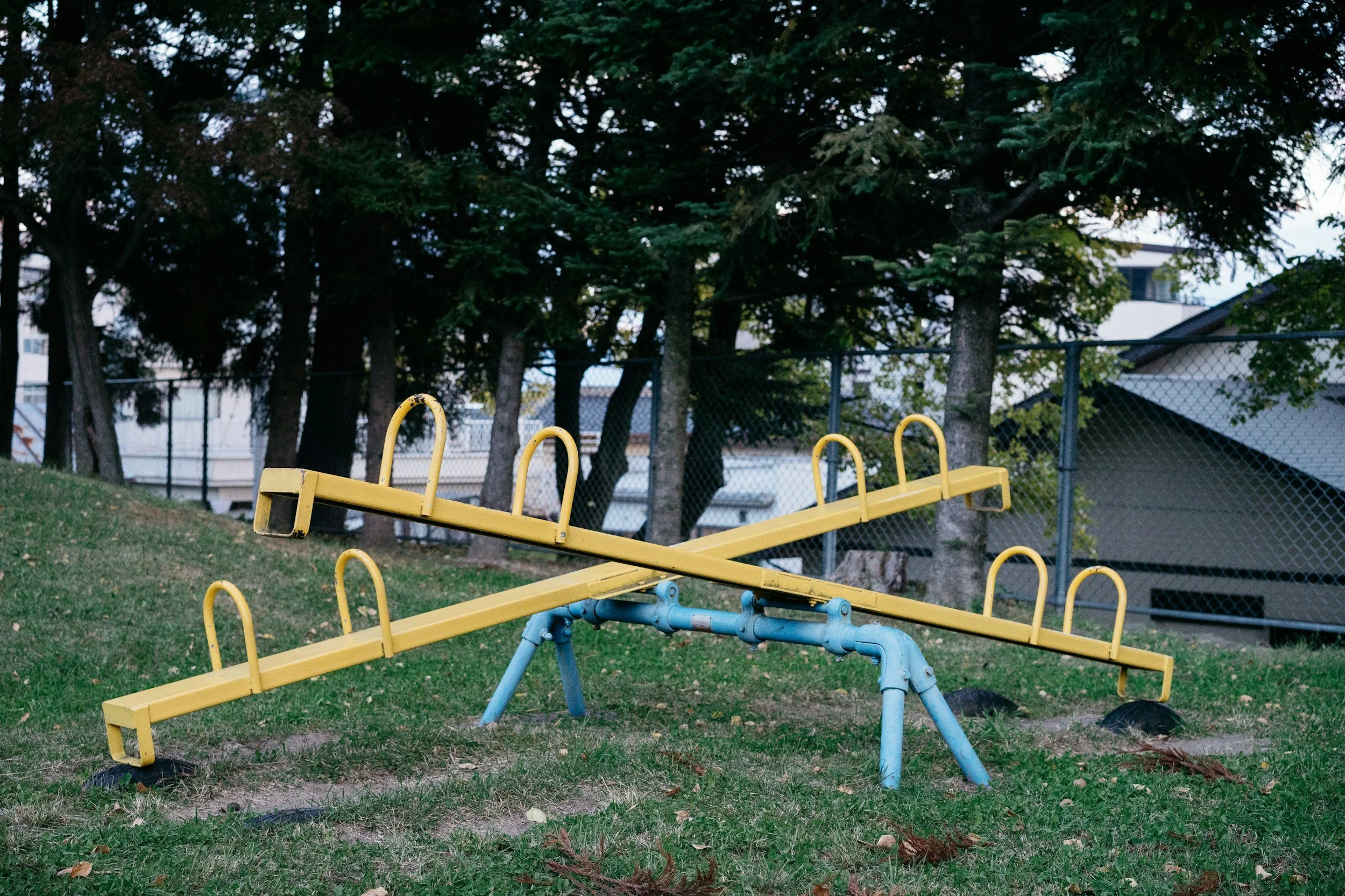
When you are grieving, your experience often feels like a constant, exhausting tug-of-war. One moment you're consumed by the pain of the loss, and the next you're distracted by a sudden need to pay bills or manage the household. You might feel guilty for these moments of distraction, wondering if you should be "working on your grief" instead.
The good news is that this oscillating experience (this back-and-forth between pain and practical life) is not a sign that you're grieving "wrong." It is, in fact, the central insight of one of the most helpful modern theories: the Dual Process Model (DPM) of Grief.
The DPM, developed by researchers Margaret Stroebe and Henk Schut, offers a powerful alternative to the rigid "stages" of grief, affirming that healthy mourning requires you to oscillate between two necessary, opposing sets of stressors.
Understanding the Two Orientations
The Dual Process Model describes the grieving experience as a necessary process of moving between two types of stressors, or orientations, often likened to a seesaw or a wave. You need both to heal effectively.
1. Loss-Oriented Stressors (The Looking Back)
This side of the seesaw is where you actively confront, experience, and process the reality of the loss. It involves painful, emotional work that is necessary for long-term healing.
What it looks like:
Intrusive Thoughts: Sudden, consuming memories of the loved one or the circumstances of the death.
Emotional Processing: Experiencing and expressing pain, sadness, longing, anger, or guilt.
Grief Work: Actively remembering, ruminating, and crying over the loss.
Yearning: Intense focus on the absence and the reality of the separation.
This phase is where the heart is fully engaged in the sorrow. It is often exhausting, but it is vital for acknowledging the severity of the change.
2. Restoration-Oriented Stressors (The Looking Forward)
This side of the seesaw is where you deal with life changes, rebuild your identity, and begin the necessary work of adapting to a world without your loved one. This work provides necessary breaks from the pain of loss.
What it looks like:
Life Adjustments: Doing the practical work of managing finances, learning new household tasks, or raising children alone.
Identity Changes: Figuring out who you are now (e.g., "I am no longer a wife," "I am now a mother of three instead of four").
Distraction and Avoidance: Engaging in new activities, focusing on work, or deliberately seeking out social contact.
New Roles: Focusing on future plans and establishing new routines.
This phase is essential for preventing the mourner from becoming completely overwhelmed and immobile beneath the weight of their sorrow.
The Act of Oscillation
The core of the DPM is the process of oscillation—the act of consciously or unconsciously moving back and forth between the Loss-Orientation and the Restoration-Orientation.
This oscillation is the healthy, active ingredient in grief.
When you are deep in Loss-Orientation (crying while looking at photos), your emotional system gets overwhelmed. You need a break.
Your system naturally shifts to Restoration-Orientation (tackling a work project or cleaning the garage) to rest and conserve energy.
Once you feel stable, the pull of the loss brings you back to the painful work of remembering.
The takeaway here is important: When you take a break from the pain of loss to focus on a practical task, you are not avoiding your grief; you are simply engaging in the necessary work of the Restoration side of the model.
How to Use the DPM in Your Own Life
Understanding the Dual Process Model provides a compassionate lens for your own experience. Here’s how you can use it practically:
Stop the Self-Judgment: When you find yourself laughing with friends or focused on a work task, do not feel guilty. Tell yourself: "I am currently in the Restoration-Orientation phase, and this is healthy."
Schedule Breaks: If you've spent an entire morning doing Loss-Oriented work (e.g., writing in a grief journal), consciously plan a Restoration-Oriented activity afterward, like exercising or going to the grocery store.
Know Your Tendency: Do you get stuck in the Loss and never seem to move? Gently push yourself to tackle a practical task. Do you constantly distract yourself with Restoration tasks? Make a deliberate appointment with yourself to sit with your feelings.
The Dual Process Model reminds us that healing is not linear. It’s a dance between remembering and rebuilding, between looking back with love and stepping forward into your future. Both are necessary, and both are valid.
If you find this helpful, please share it. And as always, reach out with any questions about navigating your unique grief journey.
Which side of the Dual Process Model (Loss-Oriented [the pain] or Restoration-Oriented [the distraction]) do you naturally lean toward? What helps you oscillate back to the other side? Share in the comments below.
Ready to find a lighter way forward? You don't have to carry this heavy burden alone.
I offer in-person grief therapy in the Denver, Colorado area and virtual therapy across all of Colorado and Pennsylvania.
Take the next step: Schedule a free, 15-minute consultation today to see how we can start working through your unique grief journey together.
